
From Peak Flow to Average Demand – Sizing a VSD Air Compressor for Variable Air Demand
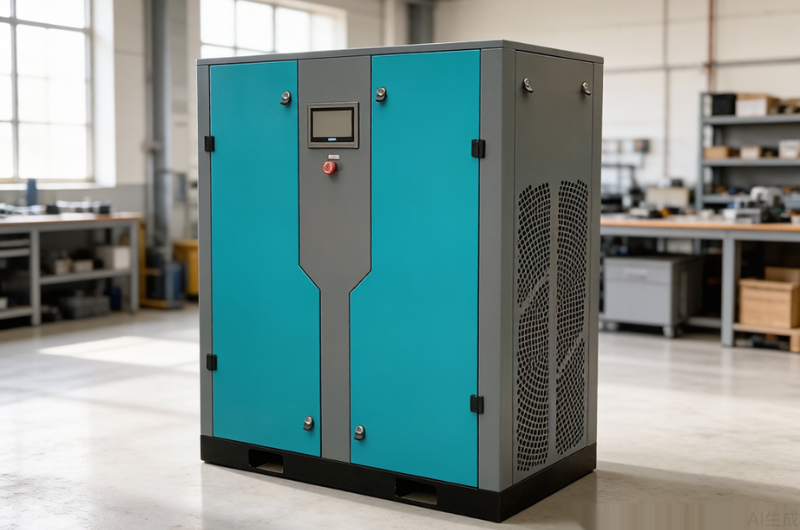
If your compressed air demand varies throughout the day, selecting the compressor is like playing a balancing game. It may be too small if you end up having pressure drop that could cause a halt in the production. It may be too much of the factory paying for idle time. Buyers are recommended to examine the compressed air flow rate, pressure, motor power, operation mode and the type of control system when picking the Industrial Air Compressor for Variable Demand.
Start With the Air Your Factory Actually Uses
Probably the biggest error most buyers commit is picking only on basis of the nameplate power on the machine. A more reliable method is starting with determining the exact consumption of compressed air. Find out how much compressed air a pneumatic tool, a CNC machine, a packaging machine or any of such other users in a factory need. After that, find out what your minimum, average and peak demand is over the different shifts.
An Industrial Air Compressor for Variable Demand should be the result of the actual pattern of air demand of the factory rather than purely the result of catering the maximum requirement. In such cases, when the production uses very little air, say in the evenings or between a couple of batches, a fixed-speed compressor will likely keep the system running for much time without the load. An VSD Air Compressor for Variable Air Demand would, on the other hand, be capable to decrease motor speed as consumption of air increases thereby helping the system not to waste too much energy.
We also need to keep an eye on airflow rate for it is not a matter that can be overlooked so easily. We have models with airflow capacities running from as little as 0.8 FAD to as high as 25.0 m³/min for HONGBO, thus allowing consumers to choose the most suitable size from different models according to the industrial application. The idea does not lie in getting the bigger model available only. The goal is to purchase the Industrial Air Compressor for Variable Demand which is sufficient to meet actual production demand and has enough extra capacity to handle both temporary peaks and future expansion in production, all of which makes sense.
Pressure Is Just as Important as Airflow
A mere airflow cannot be the sole indicator of the suitability of a compressor. Buyers are advised to get the figure of the minimum pressure that is required at the point of use and then allow for further drops in pressure due to such as piping, filtration, drying processes, valves etc.
On the subject of a Industrial Air Compressor for Variable Demand, HONGBO gives pressure settings between 7 and 13 bar only so that the customers can choose to operate the compressor matching their process needs other than over-pressurizing it.
A VSD Air Compressor for Variable Air Demand will be able to help provide more consistent pressure in the system when there are large variations in consumption levels. The mistake many people make is using a higher pressure as a cushion or safety feature because they think it is a way to have more air available when needed. It is, however, a fact that higher pressure means higher energy use and it would be better to determine the pressure setting with the help of the actual process requirements.
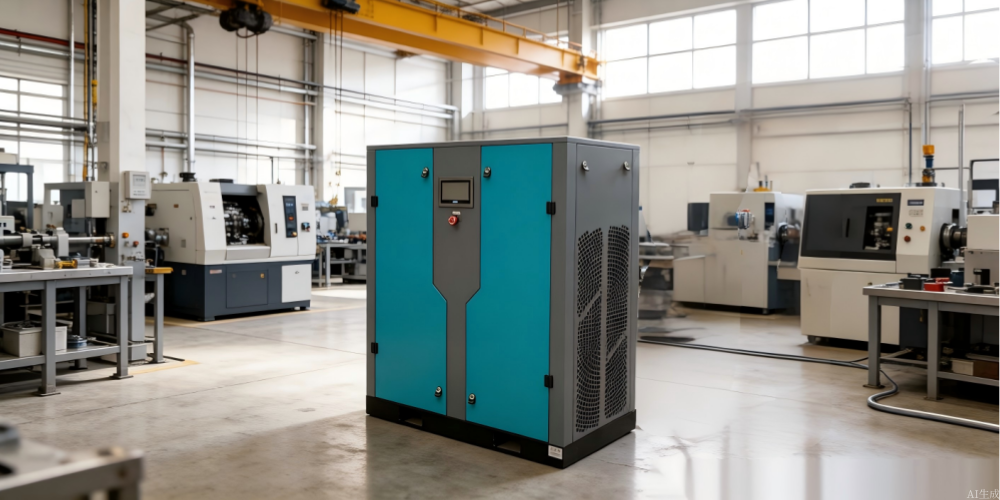
When Does VSD Technology Make Sense?
The best application for variable-speed devices is in situations where the air consumption changes often. A plant with multiple shifts, short production runs, seasonal load, or equipment that operates intermittenty is likely to get a great benefit from a VSD Air Compressor for Variable Air Demand than having to use the same unit all the time at a fixed speed.
HONGBO offers VSD systems with capacities from 7.5–160 kW which work with the help of an inverter to modify the speed of the motor as needed for the air demand. When the conditions are right, running at a lower speed can save energy when compared to a system operating only at the high level fixed speed. It matters because electricity is the big factor in the lifetime cost of compressed air equipment.
The fact though that the VSD may not work in all plants. If it was running the whole time at a constant load that was quite close to the full load operation the fixed-speed compressor might in fact have been the better investment. Buyers should therefore compare the consumption profile before deciding the Industrial Air Compressor for Variable Demand.
Avoid Oversizing the Compressor
Oversizing may look good for a while, but it can really backfire. A system that runs way above the air production it requires may waste a lot of time idling or operating inefficiently. It also adds the capital cost without any assurance of improved performance in production.
For an Industrial Air Compressor for Variable Demand, it should be capacity oriented according to the normal working conditions not the unlikely maximum. Buyers need to sum up major air users' individual demands first, figure out the degree of simultaneous use, and add a reasonable safety margin rather than making the air capacity a mere double-up from the needed air.
Besides being flexible, a VSD Air Compressor for Variable Air Demand can also adapt to the changing demand since it is a system that gives variable output. HONGBO's smart PLC and inverter control continuously monitors the conditions of operation and supports the automatic adjustment, diagnostic, and fault notifications. Such functions enable the operators to respond to a sudden change in air demand without needing to constantly make manual adjustments to the compressor.
Look at the Compressor and Much Else Besides
An ideal Industrial Air Compressor for Variable Demand selection takes into account installation conditions, means of cooling, electrical voltage, possibilities of maintenance, noise level, and air treatment requirements to name a few. With regard to cooling, HONGBO offers air-cooled and water-cooled options across its product line, and different models use belt or direct-drive transmissions that are appropriate to the capacity.
Besides specification of a VSD Air Compressor for Variable Air Demand, buyers should pay equal attention to functionality of the control system and technical support received from after-sales service. With HONGBO you get the best of engineering, research and development for compressors as well as technical support that is tailored to your applications across various industries including automotive, CNC machining, electronics, plastics, pharmaceuticals, packaging and new materials.
The main criteria to use for a purchase decision would be air volume and pressure needed, hours of operation and future changes in your process. The right choice is to have a piece of equipment that is the perfect fit for your factory, in other words, not forcing your company to adapt itself to the machine. If demand fluctuate a lot, the right-sized VSD Air Compressor for Variable Air Demand offers you a practical combination of pressure stability, flexibility and low running costs.
HONGBO Engineering Advantage
HONGBO combines R&D, design, manufacturing, and engineering experience in compressed gas equipment. Its VSD Air Compressor for Variable Air Demand uses intelligent PLC and inverter control, soft-start motor technology, stable pressure control, and real-time monitoring. The product range covers 7.5–160 kW and 0.8–25.0 m³/min FAD, giving buyers practical options for different factory requirements.
For Industrial Air Compressor Selection for Factory Use, HONGBO focuses on the actual operating conditions rather than selling one standard configuration. For Industrial Air Compressor Sizing for Variable Demand, the team can assess airflow, pressure, operating hours, and future requirements before recommending a suitable configuration.
The goal is straightforward: choose a compressor that follows real production demand, maintains the required pressure, and avoids paying for capacity the factory rarely uses. For many plants with changing workloads, VSD Air Compressor for Variable Air Demand offers a practical path toward better energy efficiency and more stable compressed air production.