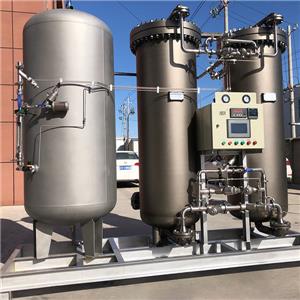

Manufacturer's price nitrogen air compressor machine for industry
The nitrogen compressor is a non-standard equipment. It is generally produced according to the requirements of the users. The rated suction pressure of the machine ranges from negative pressure to 4.0 MPa or higher, the maximum exhaust pressure can reach up to 15.0 MPa, the maximum exhaust volume can reach up to 1500 Nm3/h, and the single-unit installed power can reach 55 kw.
Overview of Nitrogen Booster Compressor
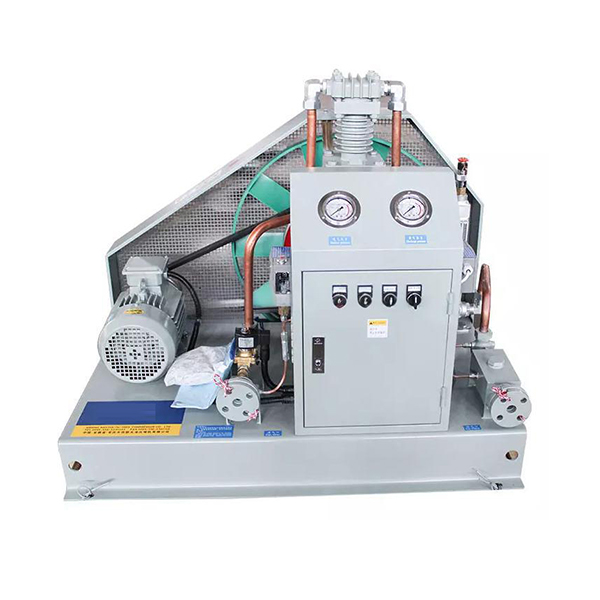
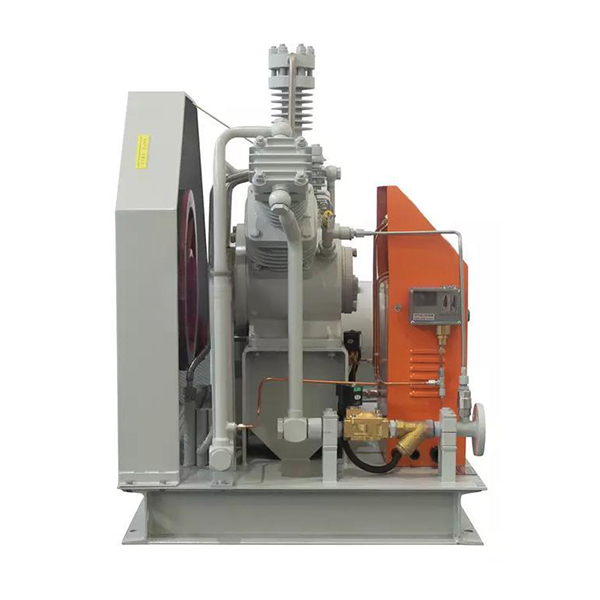
The oil-free lubrication nitrogen booster compressor (hereinafter referred to as the compressor) is an oil-free lubrication, reciprocating piston, single-acting small compressor. Its structural types include single-cylinder (ZW type), two-cylinder (VW type), three-cylinder (WW type), four-cylinder (SW type), as well as single-stage, two-stage, three-stage, four-stage and five-stage compression; the cooling methods are air-cooled and water-cooled. It is designed for users who need pure gas source and high environmental requirements. No thin oil lubrication is used in the machine, and the moving seals in the cylinder are made of self-lubricating materials to ensure that the compressed gas source will not be re-contaminated. It can be used to compress or recover stable gas media such as clean air, nitrogen, freon, and carbon dioxide. The machine adopts automatic control mode with small leakage, low noise, no need for special personnel on duty, and can operate reliably for a long time.
This series of compressors are non-standard equipment, generally produced according to user requirements: the rated suction pressure of the machine ranges from slight positive pressure to 4.0MPa or higher, the maximum discharge pressure can reach 15.0MPa, the maximum displacement can reach 1500 Nm³/h, and the installed power of a single unit can reach 55kw. The machine adopts an integral skid-mounted type, and all parts are connected before leaving the factory. Users only need to connect the inlet and outlet pipelines and power supply to enter the test run procedure.
Working Principle
1. The compressor is composed of a main engine, an electric motor, a base, a pipeline system, a cooling system and a display control system.
2. The moving mechanism of the compressor is a crank-connecting rod mechanism composed of crankshaft, connecting rod, piston and other parts: the electric motor drives the crankshaft of the compressor to rotate through belt transmission, the crankshaft drives the connecting rod, and the connecting rod drives the piston to make reciprocating linear motion, resulting in changes in cylinder volume. The automatic air valve determines the suction and exhaust process of the cylinder, so as to achieve the purpose of increasing gas pressure. The crankshaft rotates one week to complete a working cycle. The gas with lower pressure enters the cylinder through the suction port, is compressed into gas with higher pressure, and is discharged for use.
3. There is no liquid lubricant in the compressor. Both the piston ring and the guide ring are made of high-quality polytetrafluoroethylene with self-lubricating performance. All main parts have a certain anti-rust ability, and all bearings are equipped with sealing rings to ensure reliable operation of the machine.
Maintenance and Maintenance Methods ofwear Parts
1. Air Valve
Whether the air valve can work normally directly affects the displacement and interstage pressure of the compressor, and it is one of the key components of the compressor. To check the quality of the air valve, the kerosene leakage test method is often used. Only dripping leakage is allowed to be qualified, and the air valve with excellent manufacturing has basically no leakage.
2. Piston Ring, Guide Ring
The piston ring is a moving seal in the compressor, and the guide ring plays a supporting and guiding role. Its body material is polytetrafluoroethylene, and several different fillers are added according to the type of compressed gas. The service life of the piston ring is related to the gas type and working pressure. After the piston ring fails, phenomena such as insufficient displacement and slow pressure rise will occur. At this time, a new ring should be replaced. When replacing, it is required that the openings of the two piston rings in each ring groove of the piston are staggered by 180° from each other. After the guide ring fails, the machine noise and vibration will increase, and even parts such as the piston and cylinder will be damaged, which should be replaced in time. When the ambient temperature is lower than 10℃, before replacing the piston ring and guide ring, they should be soaked in boiling water for a few minutes before installation to prevent breakage.
3. Discharge Check Valve
The failure of the discharge check valve is mostly caused by the wear of the check valve disc, and generally only the check valve disc needs to be replaced.
4. Solenoid Valve
Generally, dust or tiny particles will enter the solenoid valve, causing poor closing or jamming. It can work normally after disassembling and removing the dirt. In addition, if the power supply does not conform to the specifications of the solenoid valve coil, the coil is energized with no load, or the nut fixing the coil is loose, the coil may be burned out, and it can work normally after replacing the coil. After the solenoid valve is energized, the allowable temperature rise of the coil is 80℃.
5.Safety Valve
The safety valve plays a safety protection role and will not open under normal circumstances; when the inlet and exhaust pressure is too high, a certain stage of the safety valve will open to release air, and the cause should be checked at this time. Occasionally, the safety valve may have a fault of poor sealing and air leakage, which needs to be repaired in time after discovery (it can be sent back to our company's after-sales service department for repair if necessary).
6.Others
Users should often remove dust from the machine, add grease to the bearings on time (refer to the machine label), and the bearings should be replaced by professionals after failure. The plastic or rubber pipelines for cooling water on water-cooled machines should generally be replaced every 2 years to prevent aging and water leakage. The transmission motor should be regularly maintained by professional electricians in accordance with relevant requirements.