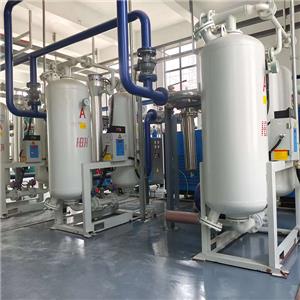
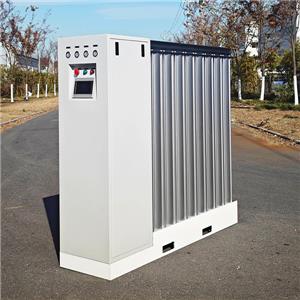
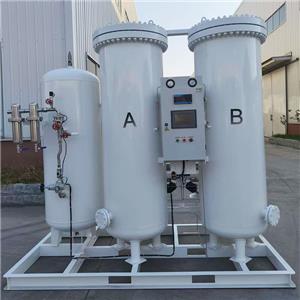
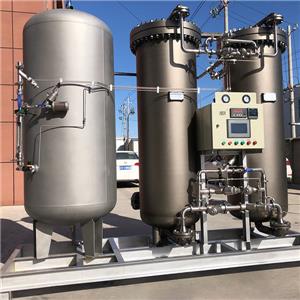

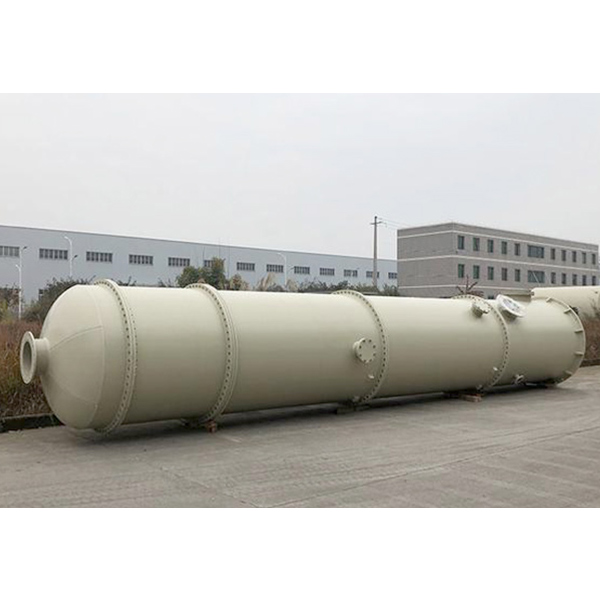
Tower Pressure Vessel: Industrial Process Column – Distillation & Stripping Column for Chemical Processing
Distillation Tower Introduction
Distillation towers are core industrial equipment based on distillation separation technology, with an extremely wide range of applications. They can not only meet the scientific research and test needs of small-scale laboratories, but also satisfy the large-scale separation requirements of large-scale industrial production. They occupy an indispensable and important position especially in general chemical production, petrochemical industry, renewable fuel processing and other industries. Its core working principle is to use the boiling point difference of two or more chemical substances in the liquid phase, and through a series of processes such as heating, vaporization and condensation, accurately separate different components in the mixture, so as to obtain high-purity target substances and provide qualified raw materials or finished products for subsequent production and experiments.
Boiling point is closely related to external pressure. Changes in pressure will directly affect the boiling temperature of substances, and this characteristic is also the key basis for distillation towers to accurately regulate separation effects. For example, water boils at 100℃ under standard atmospheric pressure (1 bar); when the pressure drops to 0.1 bar, its boiling point drops to 50℃. The core logic behind this phenomenon is that the vapor pressure of water at 100℃ is exactly equal to 1 bar, and at 50℃ it corresponds to 0.31 bar. When the vapor pressure balances with the external pressure, the substance will boil and vaporize.
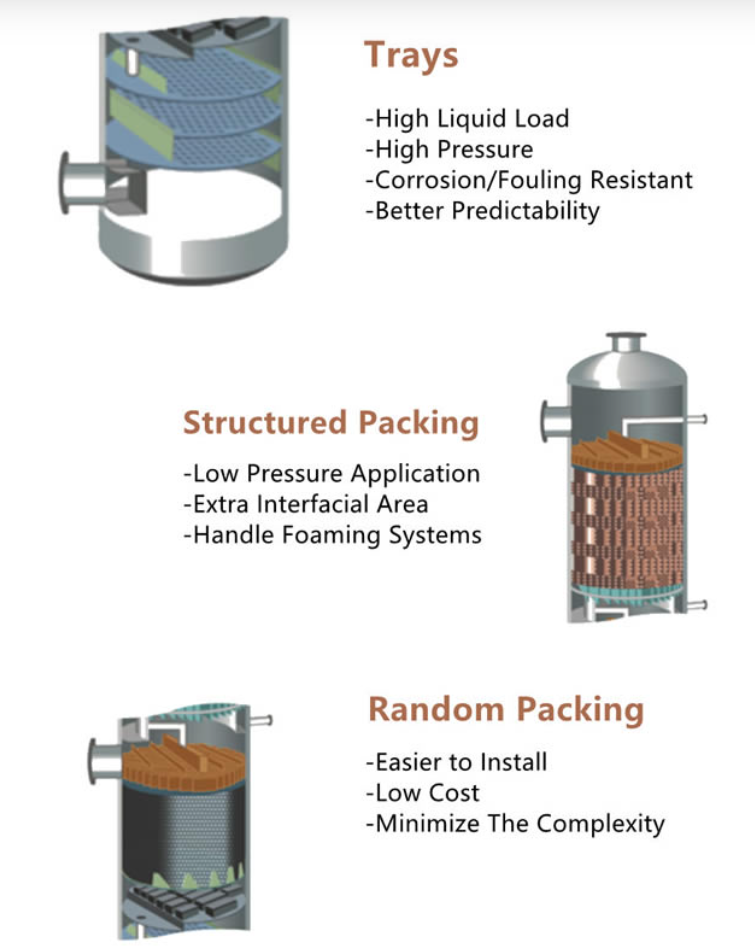
Taking the separation of ethanol-water mixture as another example, the vapor pressure of ethanol is 2.2 bar at 100℃ and 0.31 bar at 50℃, which is higher than that of water at the same temperature. The higher the vapor pressure, the stronger the volatility of the substance. Therefore, ethanol is more volatile than water, and it will vaporize first during heating. Effective separation of ethanol and water can be achieved through condensation and collection. At present, the commonly used distillation systems in industry are mainly divided into two types—tray type and packed type. There are obvious differences between the two in terms of structural shape, operational reliability and pressure-bearing capacity. The suitable type can be flexibly selected according to the characteristics of the separated materials, production scale, pressure working conditions and other needs.
Distillation Tower Production Capacity
We have a complete distillation tower production system, which can accurately match the production needs of different industries and scales, with production capacity covering various specifications. The specific parameters are as follows: in terms of size, the diameter of the distillation tower can be flexibly adjusted from 1000mm to 3400mm, adapting to different site space and processing capacity requirements. Small specifications can meet the needs of laboratories and small and medium-sized enterprises, while large specifications are suitable for large-scale production of large chemical plants; in terms of weight, depending on the differences in size, material and internal structure, the weight of a single distillation tower ranges from 1500 kg to 7000 kg, which is convenient for transportation, hoisting and on-site installation and commissioning.
In terms of processing capacity, the standard capacity can reach 1000 tons per day, which can meet the separation needs of most medium-sized industrial production; at the same time, we can customize and produce distillation towers with higher capacity according to the large-scale production needs of customers, breaking the limit of standard capacity and ensuring production efficiency. In terms of operating temperature, the standard operating temperature of the distillation tower can reach 275℃, which can adapt to the separation needs of most conventional materials. Through a precise temperature control system, the operating temperature can be stably maintained, ensuring the stability and consistency of the separation effect, and avoiding the impact of temperature fluctuations on product purity.
Materials Used and Their Advantages
The material selection of the distillation tower directly determines its corrosion resistance, service life, separation effect and applicable scenarios. According to the needs of different working conditions, we select a variety of high-quality materials, each of which has unique advantages. The details are as follows:
Carbon steel: mainly including models such as A36, A515, A516 and CRM0, which have the advantages of high strength, good toughness and moderate manufacturing cost. They have stable mechanical properties, can bear a certain pressure and temperature, and are suitable for distillation separation of non-corrosive or weakly corrosive materials and conventional pressure working conditions, widely used in the general chemical production industry.
Stainless steel: covering commonly used models such as 304, 316, 309, 310 and 321, its core advantages are corrosion resistance, anti-aging, strong hygiene, and it is not easy to have chemical reactions with materials. It can adapt to the separation of moderately corrosive materials such as acids and alkalis, and has excellent high-temperature resistance, long service life and convenient later maintenance, suitable for petrochemical, fine chemical and other industries.
Nickel alloy: including models such as 200, 400 and 600, which have extremely strong corrosion resistance and high-temperature resistance, can withstand the erosion of strong corrosive media such as strong acids, strong alkalis and organic solvents, and have high mechanical strength. They are suitable for high-end chemical, pharmaceutical and other industries with high requirements on materials, and can ensure the long-term stable operation of equipment.
Special alloy: such as Alloy 20, AL6XN, 2205 duplex steel, etc., which have multiple advantages such as corrosion resistance, high-temperature resistance and high strength, adapt to complex and harsh working conditions, can meet the separation needs of high corrosion, high pressure and high temperature, and have extremely strong stability and reliability.
Copper alloy, aluminum alloy, titanium alloy: Copper alloy has excellent thermal conductivity and is suitable for separation scenarios requiring high heat transfer efficiency; aluminum alloy is light in weight, good in thermal conductivity and moderate in cost, suitable for small and medium-sized, light-load working conditions; titanium alloy is corrosion-resistant, high-temperature resistant and high-strength, suitable for extremely harsh working conditions, such as distillation separation under strong corrosion, high temperature and high pressure environments.
Internal and external materials and weld surface treatment
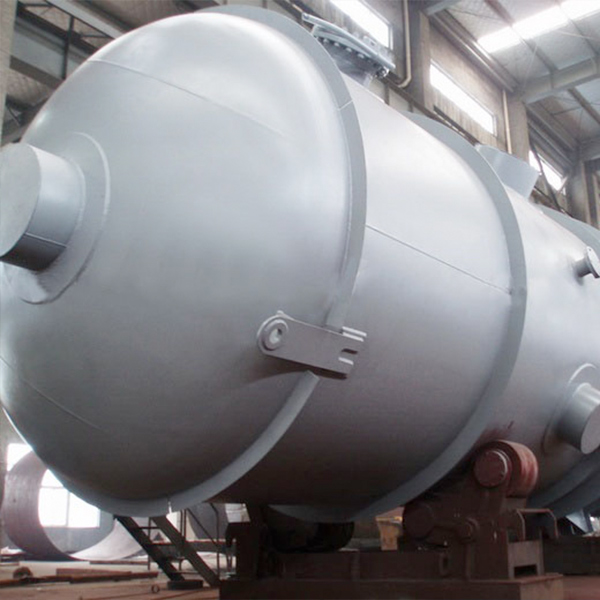
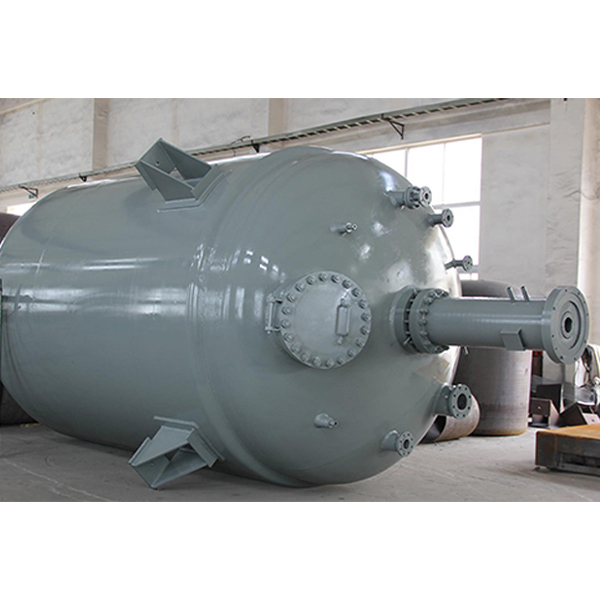
We pay attention to the detailed manufacturing of distillation towers, and perform refined treatment on internal components, external structures and welding surfaces, which not only ensures the structural stability and sealing performance of the equipment, but also improves the service life and separation effect of the equipment. The specific treatment methods are as follows: the parts of external and structural steel made of carbon steel are all professionally painted, which can effectively isolate media such as air and moisture, play the role of anti-corrosion and anti-rust, and extend the service life of the external structure of the equipment; the body adopts flange-type container connection, which has excellent sealing performance, is convenient for equipment disassembly, inspection and maintenance, and can ensure no leakage during equipment operation, improving operational safety.
In terms of internal components, complete auxiliary parts are equipped, including stoppers, packing support plates, packing, liquid collectors, liquid distributors, etc. The stoppers can fix the position of internal components to prevent displacement during operation; the packing support plates and packing can increase the gas-liquid contact area and improve separation efficiency; the liquid collectors and distributors can ensure uniform distribution and sufficient reflux of liquid, ensuring the stability of separation effect. The lower components adopt two fixing methods: bolt connection or welding, which can be selected according to actual working conditions. Bolt connection is convenient for later maintenance, while welding connection has stronger structural stability and sealing performance.
In addition, nozzles, insulation layers and welded outer sheaths can be flexibly added according to customers' actual production needs. Nozzles are used for material feeding, discharging and auxiliary material addition; insulation layers can reduce internal temperature loss of equipment, lower energy consumption, and prevent the surface temperature of equipment from being too high, ensuring the personal safety of operators; welded outer sheaths can further improve the corrosion resistance of welding parts and avoid damage to welding joints due to corrosion. As the core internal component of the distillation tower, the tray provides various types such as sieve, valve, bubble and baffle, which can be selected according to the separation process requirements to ensure full gas-liquid contact and efficient separation.
Advantages of Different Distillation Processes and Their Applicable Industries
According to different material characteristics, separation requirements and production scales, we provide a variety of distillation processes. Each process has unique advantages and is suitable for different industry scenarios. The details are as follows:
Batch distillation: Flexible operation, can adapt to the separation needs of small-batch and multi-variety materials, with low equipment investment cost and easy adjustment of separation parameters. It is suitable for laboratories, small chemical plants and industries with multi-variety and small-batch production, such as fine chemical industry and pharmaceutical intermediate production.
Continuous distillation: High degree of automation, can realize continuous and large-scale production, with stable separation efficiency and uniform product purity. It is suitable for large-scale industrial production, especially for petrochemical, renewable fuel processing and other industries, which can greatly improve production efficiency and reduce labor costs.
Stripping distillation: Also known as gas stripping distillation, its core advantage is that it can effectively remove low-content volatile components in the mixture, with precise separation effect and low energy consumption. It is suitable for scenarios such as wastewater treatment, solvent recovery and removal of trace impurities in chemical raw materials, such as environmental protection and chemical auxiliary production industries.
Azeotropic distillation: Mainly used to separate mixtures with similar boiling points that are difficult to separate by conventional distillation. It changes the boiling point of components by adding an azeotropic agent to achieve efficient separation. It is suitable for fine chemical, pharmaceutical, spice and other industries, such as deep separation of ethanol and water, spice purification, etc.
Extractive distillation: By adding an extractant, it increases the relative volatility of different components in the mixture and improves separation efficiency. It can handle materials that are difficult to separate by conventional distillation, and is suitable for petrochemical, fine chemical and other industries, such as separation of aromatics and non-aromatics, extraction of rare metals, etc.
Finishing distillation: Also known as rectification, it has extremely high separation accuracy, can obtain high-purity target products, and has strong operational controllability. It is suitable for industries with extremely high requirements on product purity, such as medicine, electronic materials, high-end chemicals, etc., and can ensure that product quality meets standards.